


Rugby sold its soul to private equity – and it has not worked
Rugby sold its soul to private equity – and it has not worked

Gavin MairsThu, August 6, 2026 at 6:00 AM UTC
0

The English Premiership paved the way for private equity in rugby - Andrew Matthews/PA
The global outrage that erupted after Gianni Infantino’s controversial plan to sell off a stake in Fifa’s competitions, including the World Cup, to private equity must have made uncomfortable viewing for rugby union’s administrators.
The mutinous reaction has been so intense and widespread that Infantino’s previously Teflon-like position now appears to be in serious jeopardy. Of course, the business of football is a much bigger beast than rugby, but still, last week’s controversy left an awkward, lingering afterthought.
If private-equity investment is so abhorrent that it united Fifa nations from across the globe, including Uefa’s 55 member associations, then why was there not a similar reaction when rugby decided to sell stakes in some of its leading competitions to private equity firm CVC?
Voicing concerns
On the eve of the 2019 World Cup, Brett Gosper, then chief executive of World Rugby, took the opposite stance to Infantino and outlined his concerns about private equity’s influence on the sport.
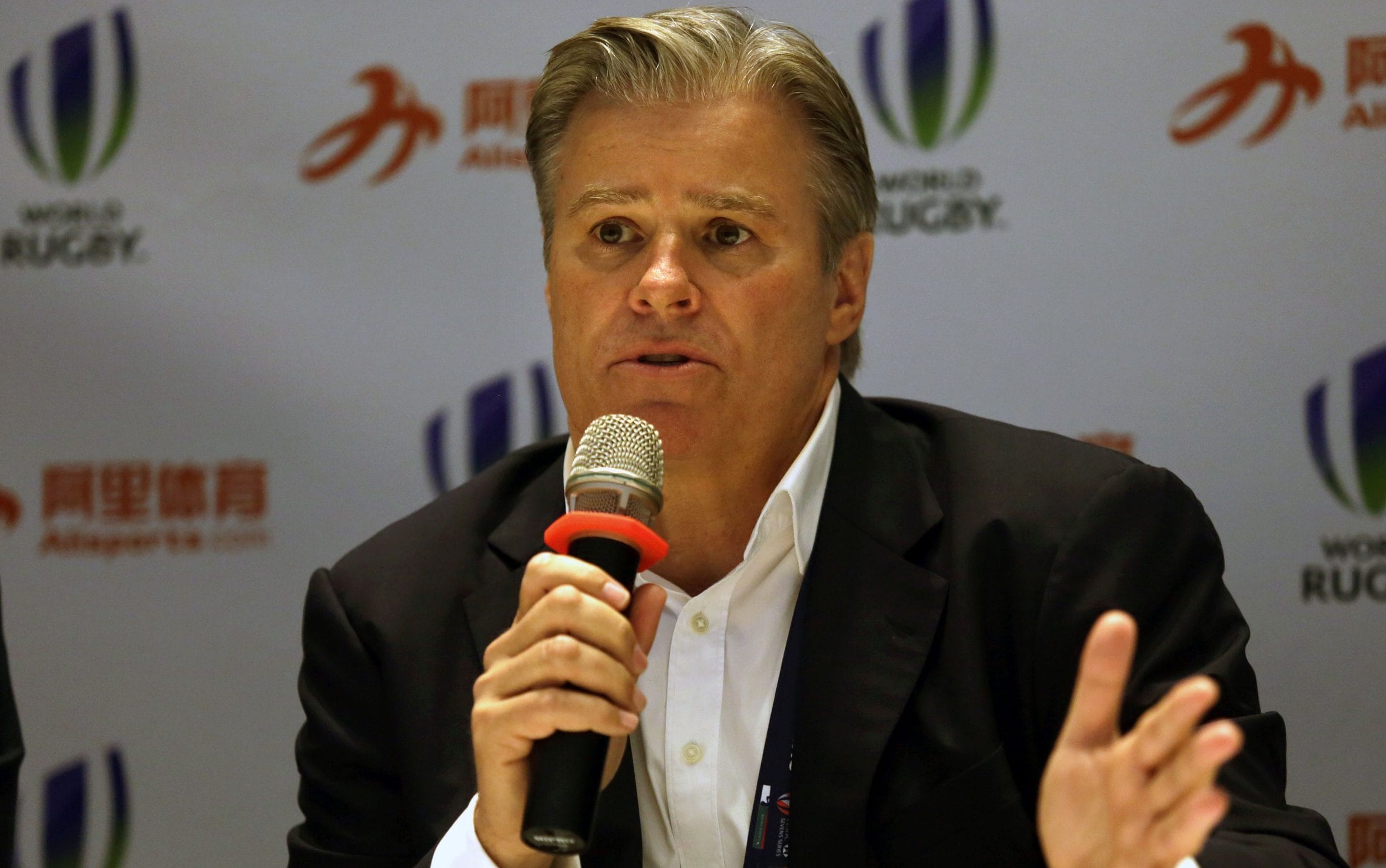
Former World Rugby chief executive Brett Gosper had his reservations about private-equity investment - Isaac Lawrence/AFP
The English Premiership had paved the way for private equity to get a foothold in the game when it sold 27 per cent to CVC in 2019 for £200m. CVC later took a 28 per cent stake in the Pro 14 (now the United Rugby Championship) for £120m. But it was the decision by the Six Nations to sell just over 14 per cent to the same company for £365m that caused Gosper to speak out.
“Certainly, a big investor in the sport like private equity firm CVC will create influence and that’s something that in some areas could concern us. So it’s important we understand from CVC exactly what their medium to long-term plans are.
“The concerns are that with a high-funding commercial owner of the sport that isn’t the governing body, whether certain calls might be made that aren’t in the interests of growth or perhaps player welfare.”
Unfounded fears
Yet, seven years on, Gosper’s concerns have proven unfounded. At the time of the investments, we were told that professional rugby was entering a new era. There were hopes (and fears) that CVC’s involvement in rugby would act as a catalyst for change. By taking a stake in both the Prem and URC, many predicted the leagues would merge. With a stake in the Six Nations, there were worries that the championship would be pushed away from free-to-air to a pay-TV deal.
CVC had previously achieved remarkable growth in the value of Formula One, and those who championed the decision to sell off stakes in future rugby revenues in return for lump-sum payments did so believing that the private equity company’s entrance into the sport would help grow the financial pie to offset that loss. Some of us, though, wondered just how feasible this would be given the political machinations of a sport that has moved largely at glacial speed since turning professional in 1995.
Advertisement
And so it has proved. Gosper need not have worried about a revolution. In the intervening years, it seems that CVC has been happy to draw down its returns. Aside from a few ideas, such as cutting operating costs by having the Prem, URC and Six Nations share the same offices in London, and in the process benefiting from shared data collection, there has been no commercial revolution.
The Six Nations and now the Nations Championship remain free-to-air following a new deal with ITV. Indeed, the Six Nations is flourishing, and the Prem is finding its feet again following an injection of new investment that suggests confidence is back after the devastation of the Covid years.

The Six Nations is thriving with record attendances - Adam Davy/PA
Meanwhile, CVC’s investment in rugby is now channelled through Global Sport Group (GSG), which is described as a multi‑sport platform for “actively managed leagues” that includes La Liga, Ligue 1, the Women’s Tennis Association and the Equine Network.
GSG says the platform allows sports to learn from each other and, by sharing best practices, can accelerate growth. But it all feels like a watered-down version of the brave new world once promised. More of a damp squib.
Of course, the Covid years were detrimental. The money that went to the Prem clubs from CVC to improve facilities and match-day experience was largely burned up by the need to avoid financial meltdown.
CVC helped by releasing a reserve assigned for marketing to help with the costs of Covid testing, which allowed the club game to return. The £90m that the RFU received from its Six Nations stake also made a positive difference to the governing body’s finances, but, like the clubs, it now faces the prospect of giving up 14 per cent of its Six Nations revenues each year.
Limited returns
It was significant to note that Rugby Australia opted for a different financial model, rejecting private equity to retain full control of future revenues. Instead, it chose to bring forward future revenues via a debt facility, repay it (following last year’s Lions tour) and commit to building a long-term sustainable model.
The New Zealand Rugby Union (NZRU) did sell an 8.5 per cent stake for about £128m to Silver Lake to ensure it could guarantee its pledge to have 50 per cent of its operating costs in reserve, but reports have recently suggested the NZRU is considering buying out that stake as part of its financial restructuring.
Perhaps the harsh truth is that rugby is just not big enough, too unwieldy and no longer offers the same promise of rich rewards for CVC in comparison to its time with F1, which yielded a reported $8.5bn return. One wonders now what its exit strategy is.
Source: “AOL Sports”
