


We can't stop arguing over ‘Yesteryear’ and ‘Strangers’. What the debate says about us.
We can't stop arguing over ‘Yesteryear’ and ‘Strangers’. What the debate says about us.

Clare Mulroy, USA TODAYThu, August 6, 2026 at 10:06 AM UTC
0
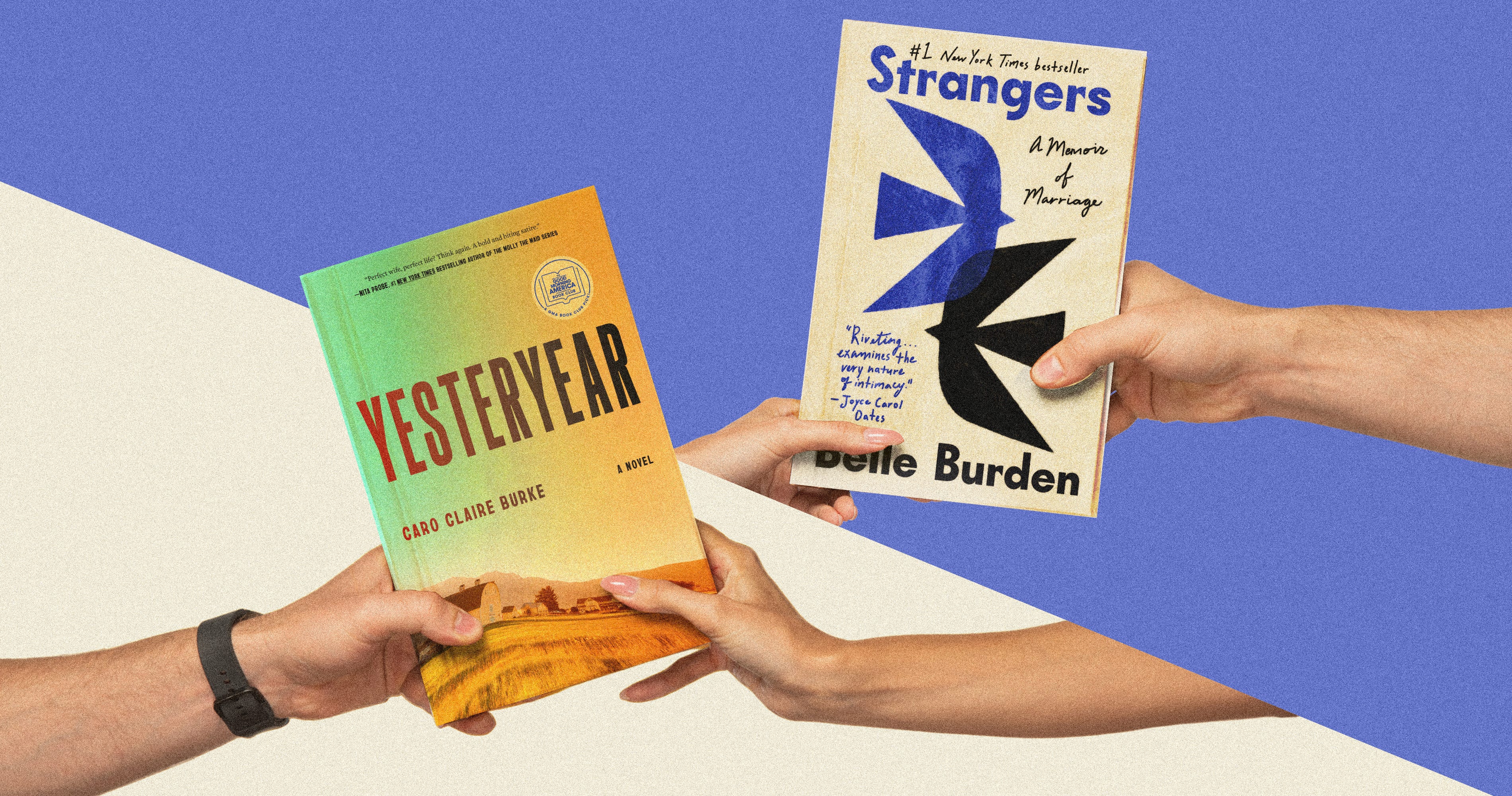
No 2026 novel ignites debate like “Yesteryear” by Caro Claire Burke.
The tradwife satire is on late night shows and in book clubs, plastered all over social media, in commuters’ hands on public transit and sparking fiery comments on Goodreads. Some love it. Some hate it. No one can stop talking about it.
As someone who reads for a living, what fascinates me most aren't the books that get booklovers talking, but the ones that get everyone else reading. Not every year has a book that so permeates the culture like “Yesteryear” and “Strangers” by Belle Burden. One is about a tradwife (traditional wife) influencer seemingly sent back in time to the period she’s been cosplaying. In the other, a memoir, the author realizes she never really knew the man she married.
These two debuts are more alike than you realize. They’re both polarizing – no one can agree on how to feel about them, making them endlessly ripe for book clubs. They’re also both about the eruption of the “perfect life.” What happens when it all goes belly up? What if it was never perfect to begin with?
And what does it say about us that we can’t stop reading about it?
How ‘Yesteryear’ bottled the tradwife debate
Nearly two years before “Yesteryear” published, Deadline reported Amazon MGM had won an auction to adapt the book into a film produced by and starring Anne Hathaway. In April, “Yesteryear” debuted into a cultural landscape fascinated with tradwife content – devoted wives who cook from scratch, sew clothes and raise their brood among nature.
Just three months later, “Yesteryear” sold its millionth copy. It’s sales data that Knopf Executive Vice President and Publisher Jordan Pavlin calls “the stuff of legends.”
“We knew from the moment we first read the manuscript that it had the potential to be a sensation. It was electrifying. We couldn't stop talking about it. It set the whole house on fire,” Pavlin tells USA TODAY.
The success of this “decade-defining publication,” Pavlin believes, is due to the “diabolically brilliant” nature of the novel. Its protagonist, Natalie Heller Mills, is a “flawless Christian woman” with millions of followers, to whom she advertises a humble homemaker lifestyle without disclosing how much of it is a lie.
The buzzy subject matter also helps. Natalie’s rural farm life, sourdough making and gaggle of children draw comparisons to Hannah Neeleman, the influencer behind Ballerina Farm's more than 10 million followers. Neeleman said in an interview with Vulture, she was only surprised an “entertaining book about tradwives" didn’t come sooner.
These traditional views of gender in marriage are nothing new, but influencers make them more visible, says Kristin Kobes Du Mez, a history professor at Calvin University in Michigan and the author of the upcoming book “Live, Laugh, Love: The Secret History of White Christian Women and the World They Made.” Prominent conservatives are embracing tradwives as political strategy.
Advertisement
“Every woman is involved in this in one way or another, either participating in it, reacting to it, feeling judged by it. And so it's a very contested space and a very personal space, which means every woman has an opinion,” Du Mez says. “That generates this conversation, which just generates more conversation, and that's great if you're trying to sell a book on the topic.”
‘Yesteryear’ and ‘Strangers’ tackle the collapse of perfection
"Strangers" is a fundamentally different book, a memoir from a Vanderbilt heiress and attorney set in luxury Manhattan apartments and second homes in Nantucket rather than prairie farms. Burden writes about her husband's betrayal and leaving with a raw vulnerability.
But both runaway debuts confront “the distance between the ideal and the real,” says Du Mez. Both touch on the false promises sold to women across the aisle: this is how you have the perfect life, the perfect marriage, the perfect family. Burden's life was perfect until it wasn't. Natalie's was never perfect to begin with.
She points to similar stories, like “Awake” by Jen Hatmaker. In this 2025 memoir, Christian blogger Hatmaker awoke in the middle of the night to her husband whispering into his phone, confessing his love for another woman. And more recently, influencer and nurse Jen Hamilton revealed to her nearly 5 million TikTok followers that her husband had been allegedly living a “double life.”
The morbid curiosity and drama can make these stories feel like a train wreck we just can’t look away from. But it’s also a welcome deconstruction of the aspirational life. In “Yesteryear,” we see deceit catch up with our protagonist. In “Strangers,” we watch Burden discover it. Nothing is as it seems – not on social media, not in affluent country club circles and maybe not even to those we love. Burden’s story inspired many women to rethink their shared finances.
“At a certain point, the whole thing breaks apart,” Du Mez says. “Then there's this questioning: ‘What lies have I been sold?’ And I think in those moments, too, there's a need to go public with that, to share the story, to connect. If you go online with your story, you will immediately find other women who will support you, who will relate to you, and who will help you process in public.”
The hallmark of a mega bestseller: Can you argue with your book club about it?
However you feel after reading these buzzy books, there’s no denying the fundamental aspect that’s kept them on bestseller lists: We love to argue about them.
When my book club friends and I discussed “Strangers” months ago, we couldn’t come to a consensus. Burden’s story of divorce was horrific. But some felt she wasn’t forthcoming enough about her privilege and financial security, the subject of a May New Yorker investigation. Similarly, we’re torn on “Yesteryear.” Some loved the unlikeable Natalie; others didn't feel she’s believable. And don’t even get us started on the twist.
“Yesteryear” is also controversial for its portrayal of religion. Burke opted not to name a specific sect, and was open about ceasing research after she started writing. Some Christian women, along with those who have left similar lifestyles, don’t feel it accurately captures their experience. Others feel the novel was one of the first successful thrillers of recent cultural obsessions.
“I think that book is so successful in part because it’s so messy,” Du Mez says. “Everybody can come to it from their own place and then have opinions.”
Clare Mulroy is USA TODAY’s Books Reporter, where she covers buzzy releases, chats with authors and dives into the culture of reading. Find her on Instagram, subscribe to our weekly Books newsletter or tell her what you’re reading at cmulroy@usatoday.com.
This article originally appeared on USA TODAY: We can't stop arguing over ‘Yesteryear’ and ‘Strangers’. What the debate says about us.
Source: “AOL Entertainment”
